HR OPERATIONS GUIDE
Application Review Rubric: Set Clear Criteria Before Screening Candidates
Build an application review rubric with job-related criteria, clear evidence labels and consistent reviewer instructions before screening candidates.
Important: This guide provides general operational information, not legal advice. Employment requirements vary by location, industry, workforce, and situation. Confirm current requirements with qualified HR or legal professionals.
Two managers can read the same application and reach different conclusions because they are looking for different things. One focuses on a familiar job title. Another looks for evidence of a particular responsibility. A useful application-review rubric makes those expectations explicit before screening begins.
The rubric should connect the role's requirements to the evidence reviewers will consider. It also needs a way to record unanswered questions so uncertainty does not disappear inside a numerical score.
This guide provides general process information, including U.S. official guidance. It is not legal advice or a validated hiring assessment. Have a qualified HR or legal adviser review criteria and procedures for your organization and location.
Start with the work described in the opening
Use the approved role description as the starting point. For each proposed criterion, ask what responsibility it supports and what an application could reasonably tell you about it.
Separate requirements needed at entry from skills the organization expects to teach. Ask the hiring owner to justify proposed credentials or experience requirements rather than carrying them forward from an old listing without review.
If the description is still unclear, resolve that first. The company-website job-posting guide can help the team prepare the role and application path before collecting candidates.
The EEOC's small-business hiring guidance calls for consistent application screening and the same standards for applicants to the same position. Consistency should include the evidence being considered, not simply the appearance of the review form.
Use evidence labels reviewers can explain
For each criterion, record its job-related purpose, the information available at this stage and the labels reviewers will use. A simple starting set is:
- Evidence present: The application includes the agreed information
- Needs clarification: The available information does not settle the question
- Requirement not met: The evidence supports that conclusion under the approved criterion
- Not assessed at this stage: The question belongs later in the process
Define the labels for the actual role. “Needs clarification” should have an approved next step, rather than becoming an informal rejection category. If the organization uses scores or weights, agree on their meaning before review and keep a supporting note for each rating.
A total alone can hide why an applicant received a particular result. Keep the underlying evidence visible to authorized reviewers.
A fictional rubric entry
Suppose an operations role involves coordinating requests between teams. The hiring owner wants evidence that the applicant has handled a comparable coordination responsibility.
The review entry might read:
- Criterion: Experience coordinating a request through several contributors
- Relevant evidence: An application example describing the applicant's responsibility and how they followed the work through
- Clarification needed: The application names a team project but does not explain the applicant's contribution
- Review note: Ask the approved follow-up question at the appropriate stage
This example does not prescribe a minimum number of years, an employer type or a universal score. Those decisions require a role-specific rationale. A different job may need different evidence or a different assessment method.
The example is fictional and should be reviewed before adaptation. It is not evidence that this criterion predicts performance.
Calibrate before reviewing the full group
Have reviewers apply the proposed rubric to the same fictional sample application. Ask them to explain which evidence supports each label. Where they disagree, identify whether the issue is unclear wording, different assumptions or information the application cannot provide.
Revise the instructions before applying them to the candidate group. If a necessary change occurs after review starts, decide how to re-review affected applications consistently and preserve the reason for the change.
For later interviews, OPM describes structured interviews as using predetermined questions and common rating standards. That is a separate assessment stage. A résumé-review form alone does not establish a structured interview process.
Keep personal assumptions out of the decision record
Write notes about the approved criteria and available evidence. Avoid speculating about a person's family plans, health, age or other personal characteristics.
The EEOC explains that pre-offer disability questions and requests for genetic information are restricted. Route accommodation requests through the organization's approved process. A common review standard should not become a reason to deny assistance that is required by law.
Use the organization's approved access and record-retention procedures for applications and review notes. Do not place sensitive candidate material in a broadly shared discussion sheet.
Make the next action clear
End each review with a reasoned outcome, the responsible decision-maker and any approved follow-up. Keep unresolved questions visible until someone addresses them. The rubric supports accountable human review; it does not remove the need for judgment or legal oversight.
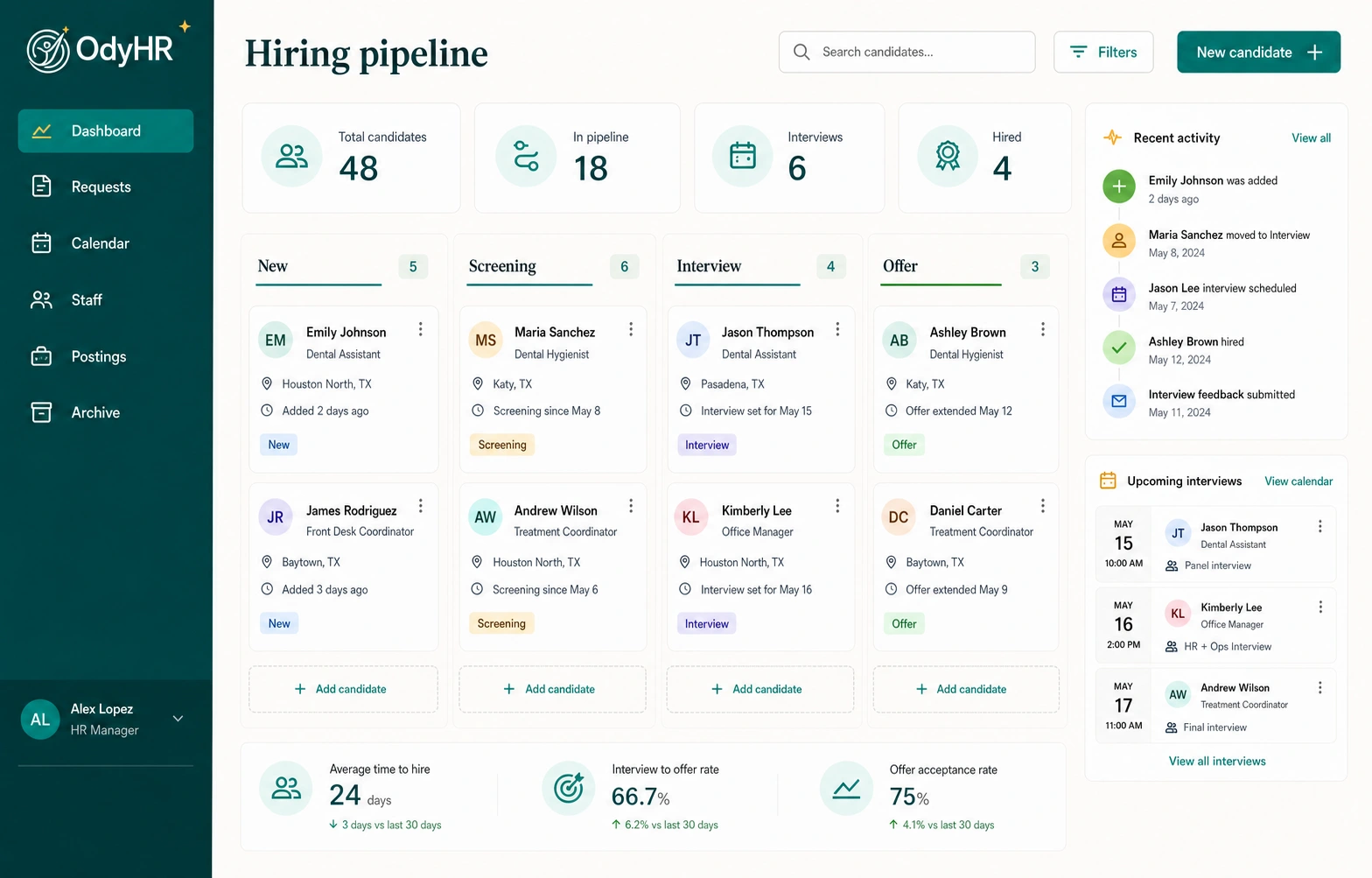
OdyHR's company job board page describes connecting applications and résumés to candidate review. Bring your review process to a workflow discussion and ask how the agreed criteria, notes and responsibilities could fit the supported setup. This guide does not imply that OdyHR provides automatic scoring or hiring decisions.
AUTHORITATIVE REFERENCES