
HIRING OPERATIONS GUIDE
A Weekly Hiring-to-Onboarding Review: Keep Every Next Step Owned
Use a short exception review to connect application decisions with onboarding preparation, without copying sensitive records into the agenda.
Important: This guide provides general operational information, not legal advice. Employment requirements vary by location, industry, workforce, and situation. Confirm current requirements with qualified HR or legal professionals.
A hiring conversation can end with everyone agreeing that someone will follow up, while no one owns the next step. A short weekly review gives HR, hiring managers and operations a place to resolve those gaps before they become last-minute onboarding problems.
This is a suggested management routine, not a legal deadline or an OdyHR reporting feature. Use it with the tools and responsibilities your organization has approved.
Review exceptions, not every record
Bring items that need a decision, a handoff or help from another person. Routine work can remain in the underlying hiring or onboarding workflow. A review is most useful when it ends with a specific action rather than a general status update.
- An application is waiting for a manager decision.
- An interview follow-up has no assigned owner.
- An accepted offer has an agreed start date but no onboarding coordinator.
- A manager, HR or IT preparation task is blocked.
- A previously assigned follow-up has passed its review date without an update.
Use your own process to decide when an item is overdue. Do not invent a universal hiring response deadline. If a required employment step has a legal deadline, the responsible adviser should confirm it separately.
Use a short agenda
A 15-minute weekly meeting is a starting point, not a required cadence. Adjust it to your volume and decision needs. Ask owners to update open items beforehand so the meeting can focus on exceptions.
| Review question | Decision to record |
|---|---|
| Which application needs a decision? | Decision owner and the next review date |
| Which candidate follow-up is waiting? | Person responsible and the next action |
| Which accepted offer needs a handoff? | Onboarding coordinator and confirmed start details |
| Which preparation task is blocked? | Blocker owner and the action needed to resolve it |
| Which earlier action can close? | Completion confirmation from its owner |
Record one accountable person per action. That person may need help from others, but the meeting should not leave the action assigned only to “HR,” “IT” or “the team.”
Check the accepted-offer handoff
An accepted offer changes the work. Someone now needs to coordinate preparation for the employee’s arrival. Confirm the agreed role, work location and start details, then identify the person who owns the handoff to HR, the manager and relevant support teams.
Ask whether the receiving owners have acknowledged their tasks. Sending an email is evidence that a request went out; it does not show that the receiving person accepted responsibility or completed the work.
Keep the wider task list in your employee onboarding checklist. Use this weekly review only to resolve the gaps that need coordination. For document preparation, see the new-hire paperwork checklist.
A fictional review example
A Houston operations team has two open items. A manager has not decided whether to move an applicant to the next interview. Separately, an accepted offer has a Monday start date, but equipment preparation has not been acknowledged.
The review assigns the application decision to the hiring manager, with a Thursday review date. The onboarding coordinator confirms the equipment request with the IT owner and records the next check. These are fictional process details, not customer results or a promised response time.
Each row now has an owner and a next action. If either item remains open at its review date, the coordinator uses the agreed escalation path instead of waiting for the following meeting.
Keep the agenda limited
A coordination agenda needs enough information to identify the work, not copies of the underlying personal records. Use an internal record reference, status, owner, next action and review date. Limit circulation to people who need to make or carry out the decisions.
Do not paste identity documents, bank details, tax forms, medical information or full application contents into a general meeting sheet. Keep those records in the organization’s approved systems with appropriate access. The FTC’s business guidance recommends understanding the information you hold, retaining only what you need and limiting access.
Close with an owner and next step
Read back each decision: who owns it, what they will do and when it will be reviewed. Close an item when its owner confirms the agreed completion evidence. Carry unresolved items forward with the current blocker and next action.
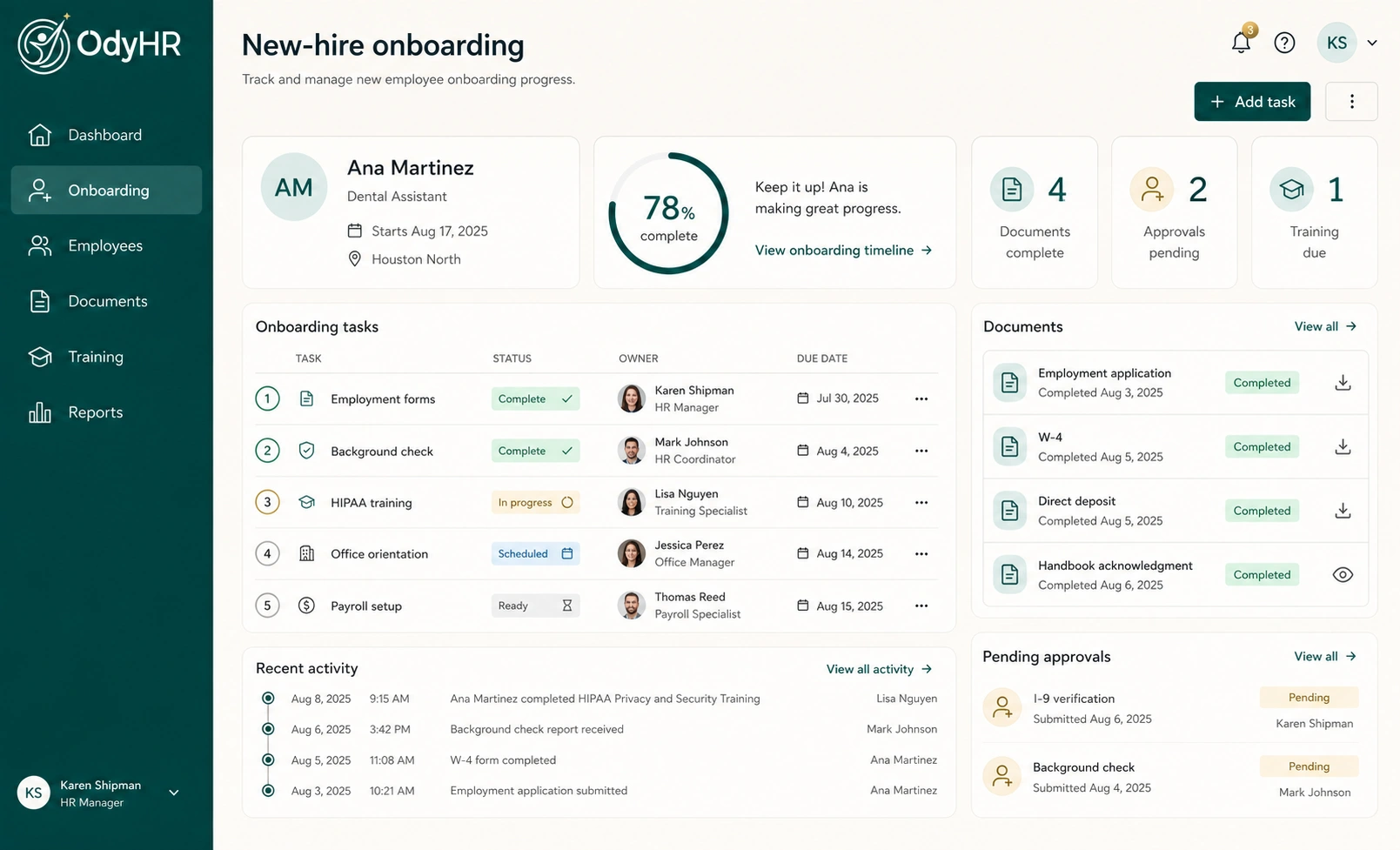
OdyHR’s company job board and employee onboarding pages describe the application and onboarding workflows you can discuss in a demo. Ask to see how those workflows fit your handoff responsibilities. This agenda does not imply that OdyHR automatically produces an exception report, connects every hiring stage or establishes compliance.
AUTHORITATIVE REFERENCES