WORKPLACE SAFETY GUIDE
Trench Safety Briefing Checklist for Construction Teams
Use OSHA's October 2026 trench citation as a prompt to review crew briefings, competent-person responsibilities, changed conditions and training follow-up.

Important: This guide provides general operational information, not legal advice. Employment requirements vary by location, industry, workforce, and situation. Confirm current requirements with qualified HR or legal professionals.
Construction employers should review how a trench-safety briefing connects workers with the person responsible for evaluating conditions and the controls required for that excavation. On October 7, 2026, OSHA announced citations following a fatal trench collapse in Pennsylvania. The agency reported failures involving cave-in protection, competent-person inspections and hazard-prevention training. The release describes OSHA's findings; it does not establish the final outcome of a contested case. Read OSHA's announcement.
For another employer, the useful next step is to examine the instructions a worker receives before entering an excavation. A signed attendance sheet cannot answer whether conditions were inspected, the protective system is appropriate or the worker knows when to leave the hazardous area. Those questions need their own clear owners.
The following briefing structure is an organizational aid. Have qualified safety personnel adapt it to the work, applicable requirements and site conditions before using it.
Identify the competent person and the communication route
Start by identifying the designated competent person for the excavation and explaining how workers will reach that person during the shift. Under OSHA's description, a competent person must be capable of identifying existing and predictable hazards and have authority to take prompt corrective action. A title or completed orientation alone does not establish those capabilities. OSHA competent-person definition.
The briefing should make the contact route usable. State the person's name, how the crew contacts them, and who handles communication if that person is temporarily unavailable. If the required oversight is unavailable, escalate before work proceeds. Do not leave workers to assume that the nearest supervisor has taken over the responsibility.
HR or an administrator can help keep existing training records organized. The employer must still determine who is qualified and authorized for the actual safety responsibility.
Connect the briefing to this excavation
Use the current site plan and approved instructions to explain where the work is taking place, which areas workers may enter and which routes they must use. Identify the controls already selected by the responsible safety personnel and explain the crew's part in maintaining them.
OSHA's excavation requirements address matters including underground installations, access and egress, falling loads, water and inspections. Its separate protective-system standard addresses protection from cave-ins. Applying these provisions requires a site-specific assessment; a general briefing cannot choose a trench-protection system for the employer. Specific excavation requirements and protective-system requirements.
Keep the spoken instructions concrete. Workers should be able to point out the approved entry and exit route from a safe location, identify restricted areas and explain whom to contact when the observed setup differs from the plan. Resolve a mismatch before treating the briefing as complete.
Explain what happens when conditions change
A morning conversation does not settle conditions for the whole day. OSHA requires competent-person inspections before work, as needed during the shift, and after rainstorms or other events that increase hazards when employee exposure can reasonably be anticipated. When the competent person identifies specified hazardous conditions, exposed employees must be removed until necessary safety precautions are taken. 29 CFR 1926.651(k).
Build those responsibilities into the communication plan. Explain how workers report a concern, how affected work is stopped and how the crew receives updated instructions. The site procedure should identify who communicates that the required assessment and corrective measures have been completed. A coworker's informal reassurance should not become an alternative approval route.
Practice a short communication scenario
Consider this fictional training example: after a weather change, a worker notices that the conditions around the excavation differ from those discussed at the morning briefing. Another person says the task will take only a few minutes.
Ask the crew to explain the approved response. Who receives the concern? How is the affected work paused? Where should workers wait safely? Who communicates the next instruction after the responsible safety personnel assess the situation?
The exercise should test whether workers can use the site's procedure under time pressure. It should not ask them to diagnose soil conditions, improvise protective measures or carry out an unplanned rescue. Emergency instructions belong in the site's established response arrangements and must be reviewed by qualified personnel.
Check understanding before closing the briefing
Invite questions in a way that lets workers identify confusion without being hurried back to work. Use the languages and communication methods the crew needs. Ask a worker to describe the escalation route in their own words and explain what would cause them to seek clarification.
If the answer differs from the approved instruction, correct the explanation and check again. Record unresolved questions with a named owner. Do not use a completed video or an attendance acknowledgment to close a safety question that remains unanswered.
Keep training follow-up connected to the employee
A practical briefing record can identify the topic, site, procedure version, date, participants, trainer and outstanding follow-up. Keep inspection and technical safety decisions in the employer's designated safety-record process. Use the employee training matrix guide to plan who needs the approved instruction and who still needs follow-up.
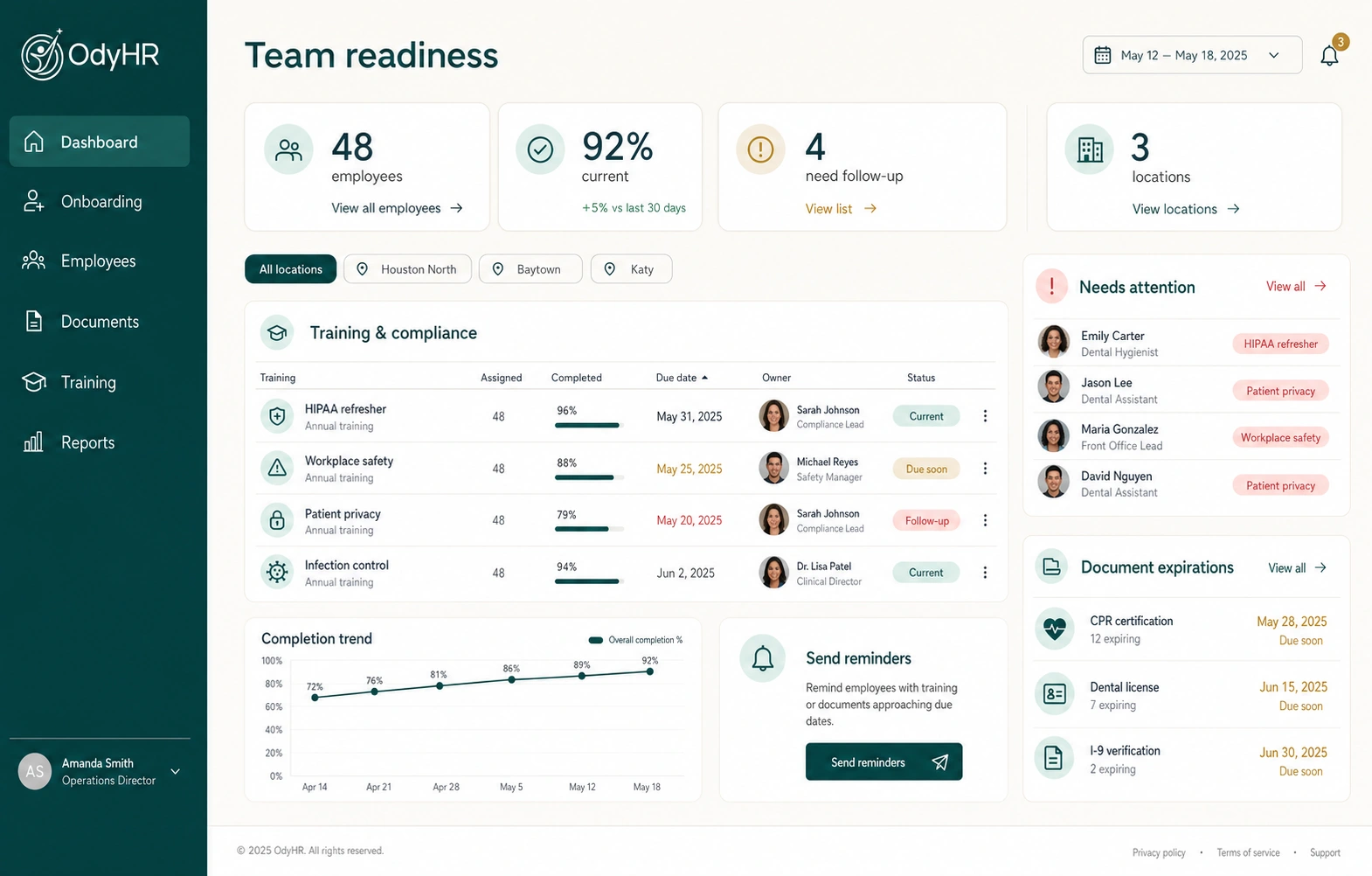
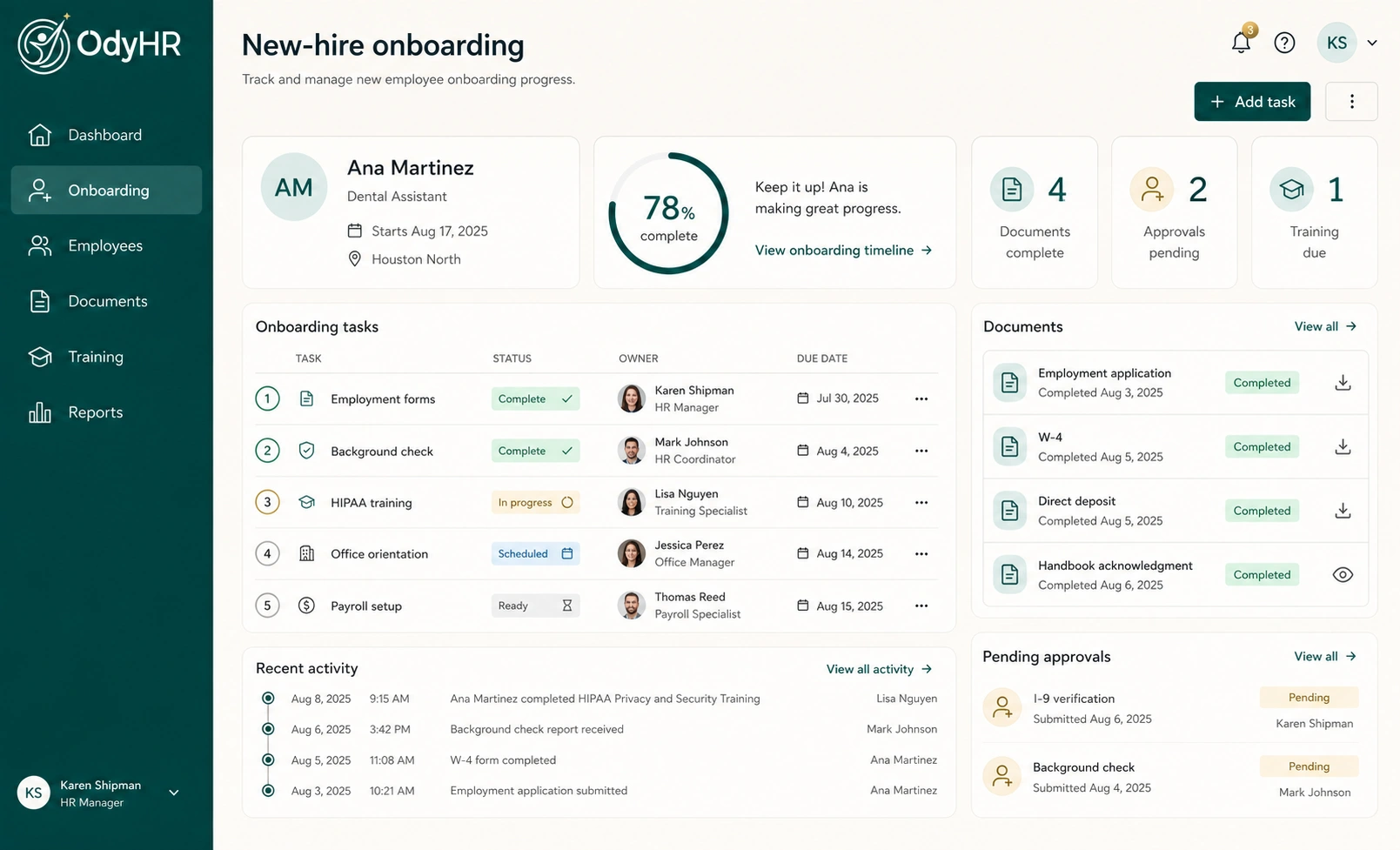
OdyHR connects employee training completion and follow-up with the employee's work history. Bring a fictional briefing record to an OdyHR workflow conversation to discuss that administrative fit. The employer's qualified safety team remains responsible for the excavation assessment, controls and authorization to proceed.
AUTHORITATIVE REFERENCES