RESTAURANT HR GUIDE
Restaurant Employee Training Records Across Roles and Shifts
Keep restaurant training records useful across stations, shifts and locations, with role-specific instruction, credential access and clear manager handoffs.
Important: This guide provides general operational information, not legal advice. Employment requirements vary by location, industry, workforce, and situation. Confirm current requirements with qualified HR or legal professionals.
The evening manager needs to know what a new employee has practiced, which station they are preparing to work and where to find the relevant training records. “They trained with someone this morning” leaves too much for the next shift to reconstruct.
Restaurant employee training records should support those everyday handoffs. Keep required credential evidence connected to the employee, while recording the restaurant's own station and workflow instruction in enough detail for another manager to use. The practical aim is continuity across people, shifts and locations.
Establish the requirements for the location and role
Start with the authority responsible for the restaurant's food permit. The FDA Food Code is a model used by jurisdictions to develop their own rules. Its publication does not create one identical training requirement for every U.S. restaurant.
Texas provides a useful example of why role definitions matter. The Texas DSHS food-handler FAQ describes food employees by their work with unpackaged food, equipment, utensils or food-contact surfaces and identifies exemptions from food-handler training. A job title alone may leave the relevant duties unclear.
Ask the responsible manager to confirm which requirements apply to each role, including any manager certification and coverage requirements. Record the source and review date. For a Houston location, consult the city's current food-manager and food-handler guidance: it describes a food-safety framework change effective September 1, 2025. Older local instruction sheets deserve a fresh check before becoming the basis of a training plan.
Describe what the employee does at the station
Translate the restaurant's approved procedures into specific learning assignments. A receiving employee may need to practice using the approved receiving record and escalating an exception. A server may need to locate current ingredient information and follow the restaurant's process for passing an allergy question to the designated manager. A closing employee may need a walkthrough of the approved cleaning procedure for that station's equipment.
These are examples for the food-safety owner to adapt, rather than a complete training syllabus. Identify the procedure version, the person providing instruction and the work the employee is expected to practice. Avoid vague entries such as “kitchen training” that could mean several different activities.
If the employee cannot find the current procedure or the equipment differs from the training example, record the problem. The training-needs assessment guide can help a manager separate an instruction need from missing tools or an unclear process.
Leave a handoff the next shift can use
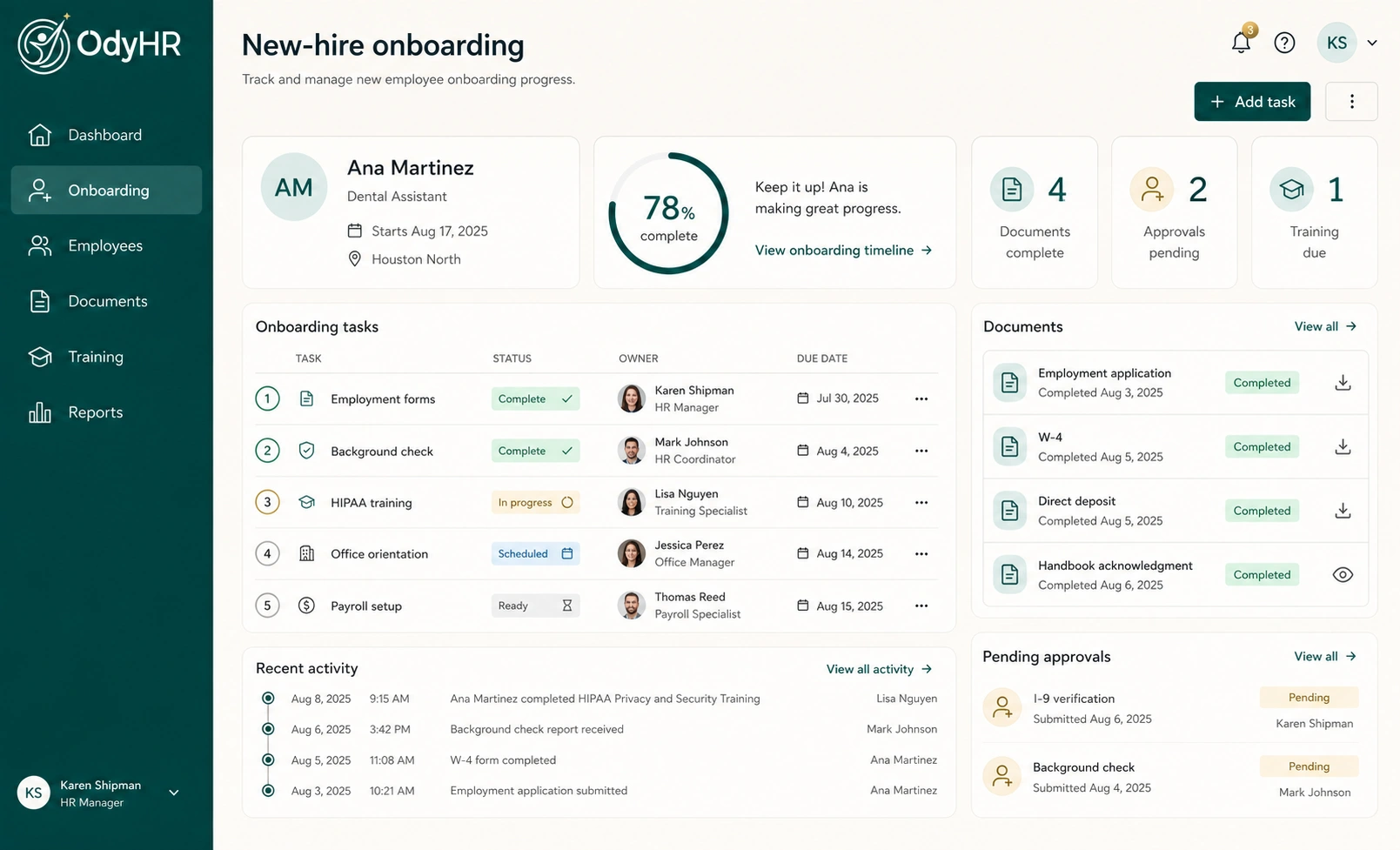
At the end of a training session, have the trainer leave a short operational note. Identify the station, activity covered, practice completed and next step. If additional supervision or practice is needed, name who will provide it and when the employee is expected to meet them.
For example: “Receiving procedure v3 reviewed with Dana. Sample receiving entry completed. Exception-escalation practice still open; evening lead to review before the next receiving assignment.” This is a fictional operating note, not a required regulatory form.
The receiving manager should acknowledge ownership of the open item. An employee should not have to explain a previous shift's unfinished training from memory. Keep private personnel comments outside the shared shift handoff; the next lead needs the operational action and relevant instruction.
Keep credential evidence available where it is needed
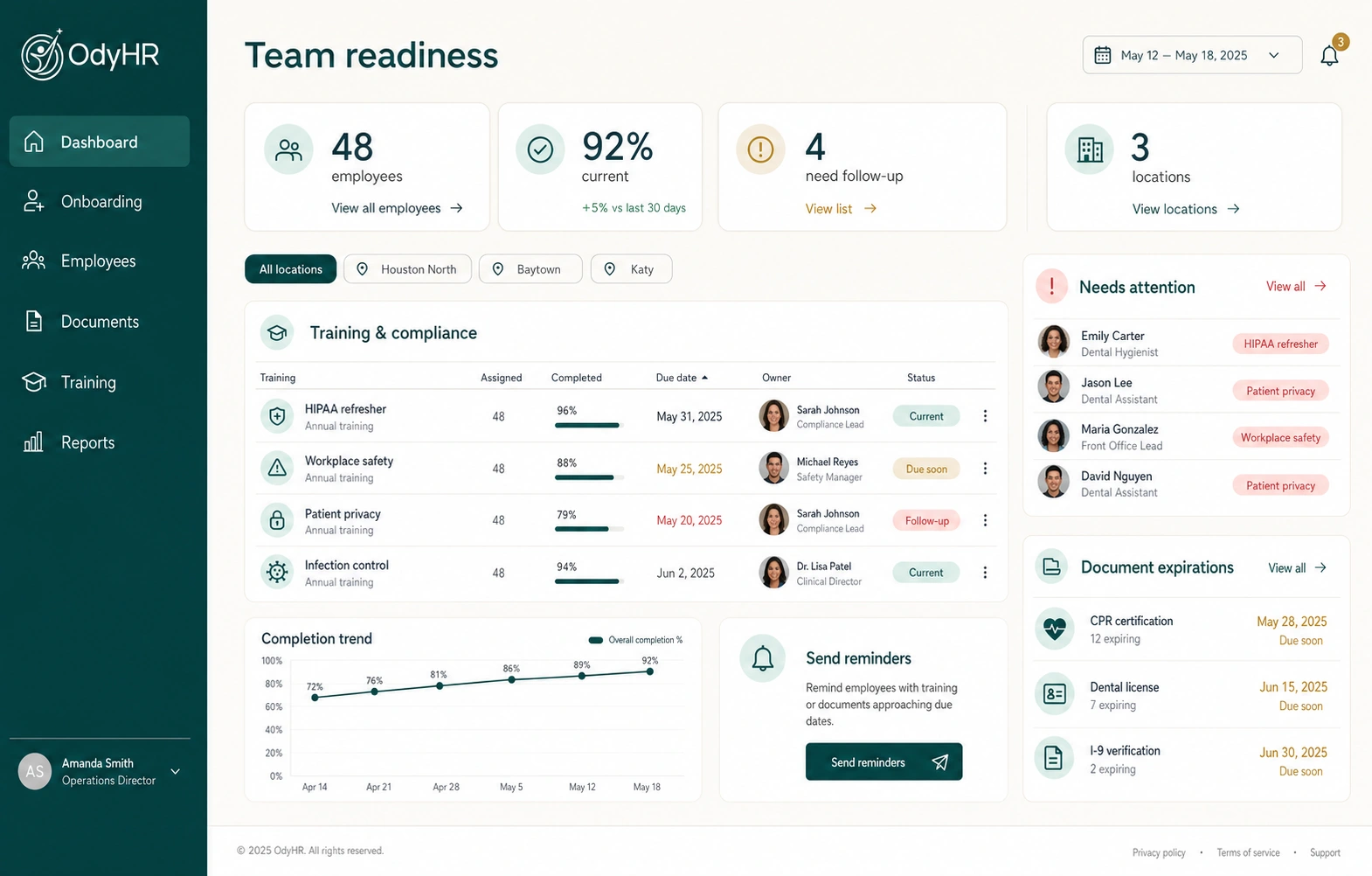
Credential storage needs to work during service. Texas DSHS says food-handler completion certificates must be maintained on premises and may be hard copy or electronic, provided they are onsite, accessible and available to the regulatory authority on request. Confirm the record-access arrangement with your permitting authority, then check that the authorized manager at the location can actually retrieve the record.
Keep manager and handler credentials clearly labeled. Texas DSHS's certified food-manager guidance describes certification through an approved examination. A restaurant's internal orientation record should retain its own description so nobody confuses it with that credential.
For document organization and access planning, use the employee-file guide. Give managers access to what they need for their responsibilities without circulating whole personnel files among shift teams.
Review a move between restaurants as a new handoff
Imagine Luis has completed his required credential training and works at a restaurant's first location. He is scheduled to cover preparation work at a second location with a different receiving layout and labeling workflow.
The receiving manager checks the existing credential evidence against the requirements for that assignment. The location trainer then reviews the local procedures and records the practice Luis completes. His earlier learning remains part of his history, while the new location's instruction is identifiable by its own date and procedure version.
If Luis moves again, the next manager can see what was covered at each location. The business avoids treating “worked here before” as the entire preparation record. This fictional example illustrates the handoff; the food-safety owner must decide the actual instruction and supervision needed.
Revisit the record when the operation changes
A changed menu, station procedure or piece of equipment can create a new learning need even when a credential remains current. Have the procedure owner identify who is affected, what changed and how the team will receive the updated instruction. Keep the older completion history rather than rewriting it to describe material the employee never saw.
OdyHR can hold private, employee-scoped copies of existing certificates and licenses within the employee document record. Your managers still own the required review and the restaurant-specific training decisions.
Talk through your restaurant workflow with OdyHR. Bring a fictional shift handoff or location transfer, including the records managers need to find and the open practice they need to take over.
AUTHORITATIVE REFERENCES