EMPLOYEE RECORDS GUIDE
How to Manage Employee Certificate and License Records
Collect employee certificate and license records with clear evidence, appropriate access, and human follow-up, including a carefully scoped TWIC example.
Important: This guide provides general operational information, not legal advice. Employment requirements vary by location, industry, workforce, and situation. Confirm current requirements with qualified HR or legal professionals.
A new employee sends a certificate. Someone saves it, marks a checklist complete, and moves on. Later, a manager needs to know which organization issued it, whether it applies to the employee’s current work, and who checked it. The attachment alone may leave all three questions unanswered.
Employee certificate and license records work better when collection includes a short review. Identify what the document represents, connect it to the right employee, and give any unresolved question an owner. That approach works across industries even though the evidence itself differs.
Start with the document’s purpose
A construction company may receive an OSHA Outreach course-completion card. A restaurant may collect evidence from an outside food-safety course. A law firm may hold an attorney’s admission record. Calling all three “certifications” can obscure what a reviewer actually needs to establish.
Use the title and issuer shown on the record. Note the course, license, jurisdiction, or credential type as applicable. Ask the responsible subject owner what evidence the role requires before requesting more documents.
For example, OSHA describes its 10-hour and 30-hour Outreach cards as course-completion cards; Outreach courses do not confer certification. Record the industry and course length shown rather than labeling the employee “OSHA certified.”
For a law-firm example, the State Bar of California’s Certificate of Standing reports information including an attorney’s status as of the certificate date. It differs from the admission certificate someone might frame. A reviewer should identify which document was supplied and which question it answers. Other jurisdictions have their own sources and processes.
Collect enough information to make review possible
Before requesting a copy, decide whether your organization needs the full document, a reference to an approved source, or a dated review record. Follow the applicable requirements and your organization’s information-handling rules.
A practical intake record can capture:
- The employee and the role or assignment that makes the evidence relevant
- The document’s exact type, issuing organization, and relevant jurisdiction or program
- The issue or completion date, with any stated expiration recorded separately
- Where the approved evidence is held and when it was received
- Who will review it, what remains unclear, and when to follow up
Avoid putting full credential numbers in filenames or broadly shared lists. Ask for additional identifiers only when the approved review process needs them.
Read the document before closing the request. A cropped image may omit the issuer. A receipt may show that someone paid for a course without showing completion. Ask for the specific missing evidence so the employee knows what to provide.
Handle TWIC according to its maritime purpose
TWIC, the Transportation Worker Identification Credential, is a useful example of why the credential type matters. It is a federal maritime credential issued by TSA. The U.S. Coast Guard’s overview describes its role for personnel requiring unescorted access to secure areas of regulated facilities and vessels.
For a construction employee assigned to a relevant maritime facility, have the responsible site contact establish whether TWIC is required for the planned access. A construction role or a job near a port does not, by itself, establish that requirement.
If your approved process needs an employee record of TWIC evidence, retain only what that process requires and restrict access appropriately. Do not routinely collect full card images or distribute credential numbers to everyone preparing the work schedule.
A saved copy has a limited purpose. TSA’s card-reader guidance describes checks involving authenticity, expiration, card status, and the person presenting it. An HR attachment does not perform those checks or grant site access. The responsible people must still follow the applicable access process.
Give receipt and review different meanings
“Received” should tell a colleague that the requested evidence arrived. A review note should explain what a person actually checked. If authenticity or current status must be established, follow the issuer’s or regulator’s appropriate process and document the source and date of that check.
For example, a fictional restaurant receives a course certificate that shows an employee’s name but no clear provider. The coordinator records receipt, asks the employee for the provider details, and leaves the review open. The subject owner then decides whether the clarified evidence meets the location’s requirement.
Keep the follow-up specific: missing issuer, unclear document type, unreadable date, or status check required. Assign it to someone able to resolve the question. A generic “complete” label makes handoffs harder when receipt and review happen at different times.
Plan reviews around the record and the work
Separate an issuer’s expiration date from an internal review date. A team may choose to recheck a record before a changed assignment even when the document has no stated expiration. Do not invent an expiry merely to fill a tracker.
Ask the responsible owner which changes should prompt review, such as a new jurisdiction, different work location, replacement credential, or notice from the issuer. Agree on the next action and a date where needed. Use your team’s existing task or calendar process for that human follow-up.
Limit document access to people who need it. The FTC’s business guidance recommends collecting only necessary information and restricting access by job need. Apply your approved retention rules, and use references in shared planning records when the full document should remain private.
Keep the evidence connected to the employee
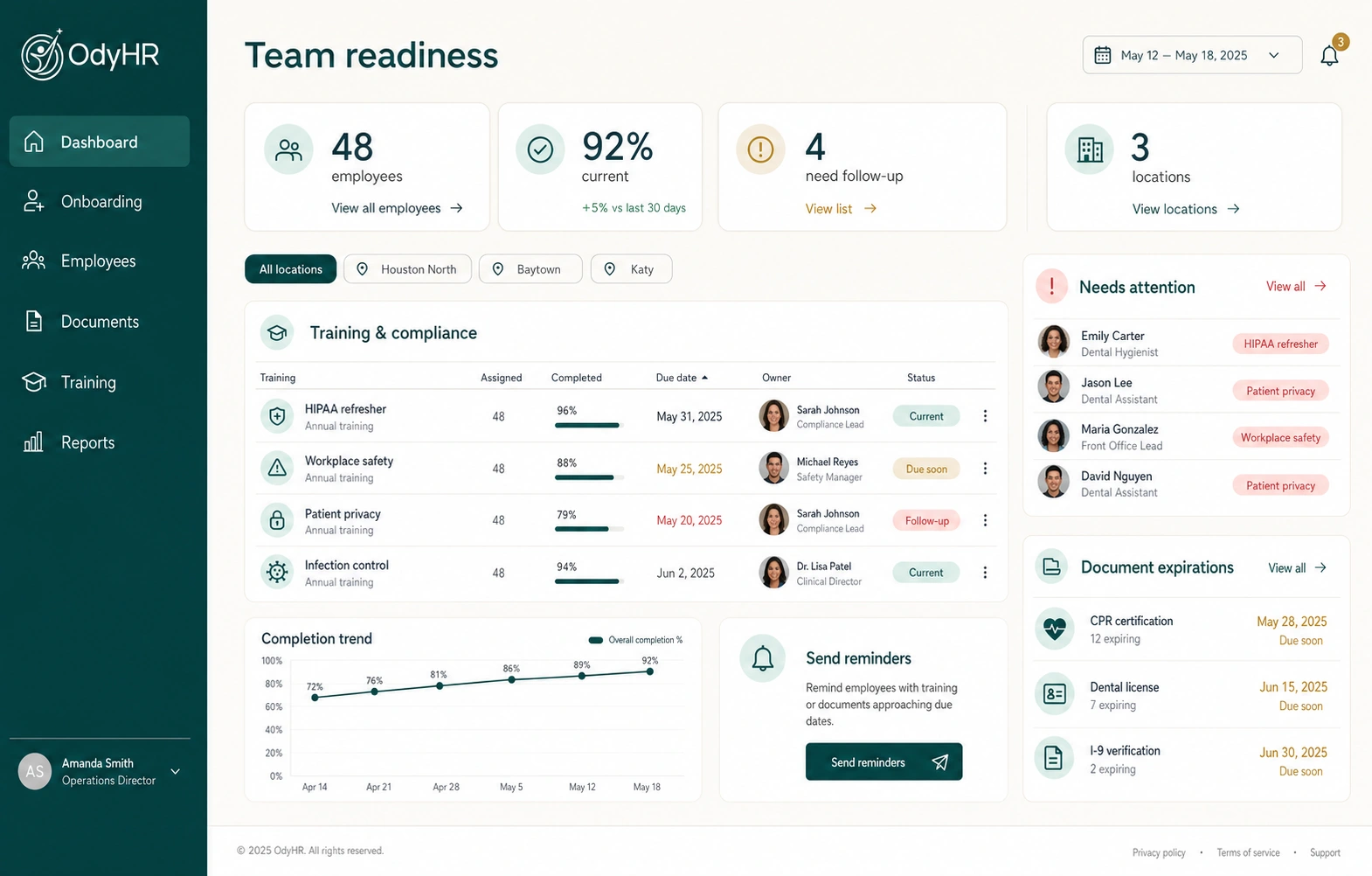
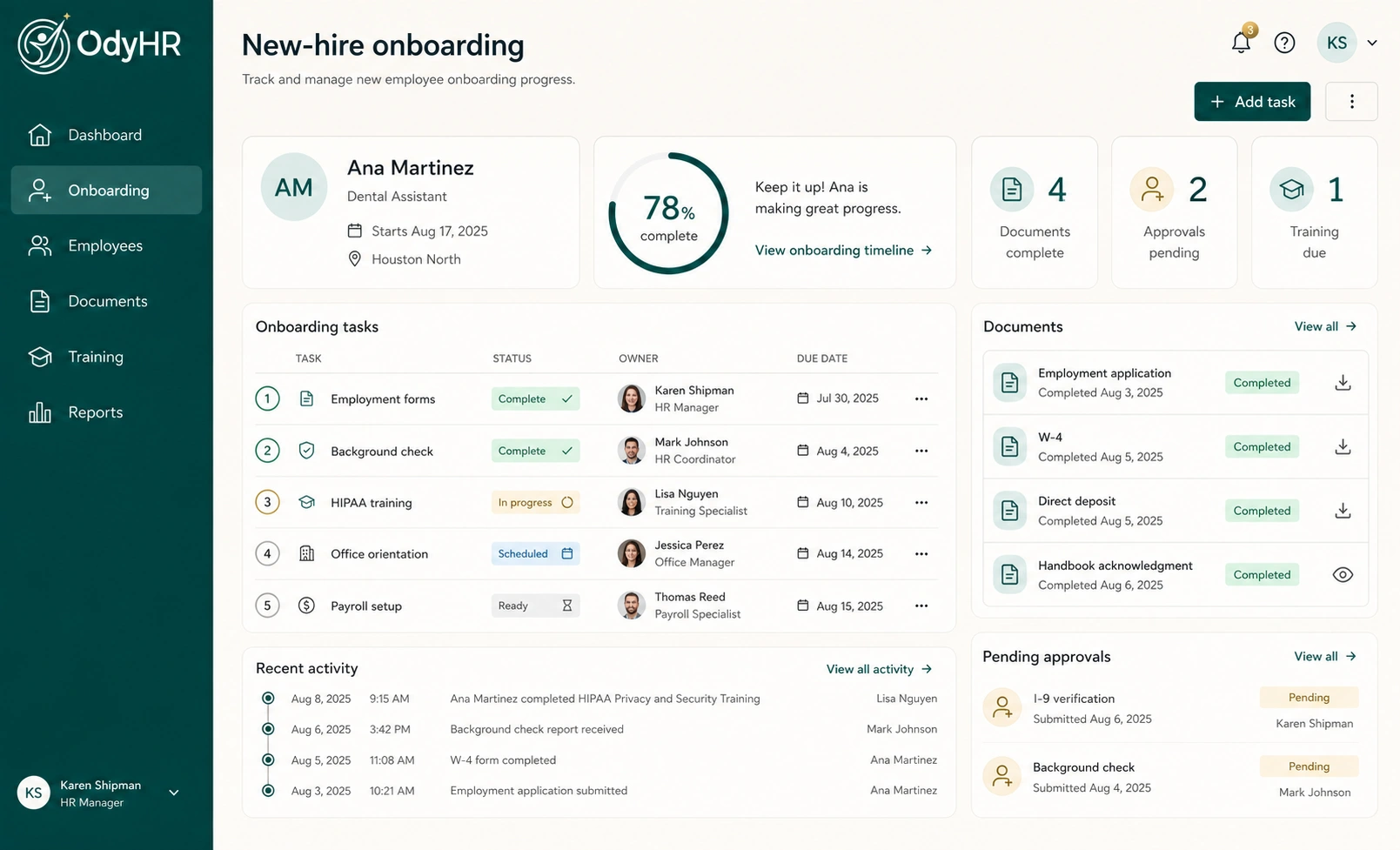
OdyHR supports keeping existing certificate and license copies in private, employee-scoped documents. Its employee-document workflow connects records with the employee’s work history and follow-up. Credential review remains a human responsibility.
Use the employee-file organization guide for your wider records structure. If a review identifies new learning to assign, the training-matrix guide covers that separate next step.
Bring a fictional or redacted example to an OdyHR workflow conversation. Start with the document you receive, the decision someone must make, and who should be able to see the result.
AUTHORITATIVE REFERENCES