HR OPERATIONS GUIDE
Internal Employee Transfer Checklist: Move Work, Access and Expectations Together
Plan an internal employee transfer with clear owners for unfinished work, access changes, role expectations and follow-up around the effective date.
Important: This guide provides general operational information, not legal advice. Employment requirements vary by location, industry, workforce, and situation. Confirm current requirements with qualified HR or legal professionals.
An employee can know the company well and still need a clear start in a new role. A team transfer may change who assigns work, which systems the person can use, who approves requests and what happens to unfinished responsibilities.
Use an internal employee transfer checklist to coordinate those changes around the agreed effective date. Some teams call this internal onboarding or transboarding. The useful question is what changes for this person and who will verify each change.
This is a planning guide, not legal advice or a universal list of required employment documents. Ask the responsible HR adviser to confirm what applies to the role, location and circumstances.
1 Agree on the transfer before preparing the handoff
Create a short, approved transfer summary. Include the current and new role, team, manager, location and effective date. Identify any agreed overlap period and the person who can resolve conflicting priorities during it.
Confirm which owners need to review changes to schedule, pay administration, benefits or other employment details. Keep those decisions in the appropriate controlled records. A general coordination checklist usually needs a status and responsible owner rather than copies of confidential terms.
Give the employee a clear point of contact. If the date or scope changes, update the transfer summary and notify the affected owners so preparations do not continue from an old version.
2 Decide what happens to unfinished work
The outgoing manager should review open responsibilities with the employee. For each one, choose a specific treatment: finish before the move, hand over to another person or retain temporarily with an agreed limit.
A useful handover note includes:
- The current state of the work and its next deadline
- The receiving owner and where the approved working record lives
- A decision or dependency that could block progress
- Confirmation that the receiving owner understands the next action
Include recurring responsibilities, such as approvals or answering a shared inbox. These can be missed when the conversation focuses only on projects. Avoid leaving the employee indefinitely responsible for both jobs because no replacement owner was named.
3 Review existing access as well as new requests
Ask the authorized system and facilities owners to review what the new role needs, what remains necessary during the handover and what should end. Include shared folders, approval rights, role-based application access, keys and building access where relevant.
This approach is consistent with NIST's personnel-transfer control, PS-5, which calls for reviewing and adjusting physical and system access when people transfer. NIST SP 800-53 is a security-control catalog; citing it here does not mean every control is legally required for every business.
Give any temporary access a stated purpose, approving owner and review date. Authorized owners should make and verify changes using their approved procedures. A checked box in an HR tracker does not itself change permissions in another application.
4 Prepare the new role's first assignments
The receiving manager should describe the employee's early responsibilities, decision boundaries and route for help. Review team-specific routines even when the employee already knows the organization.
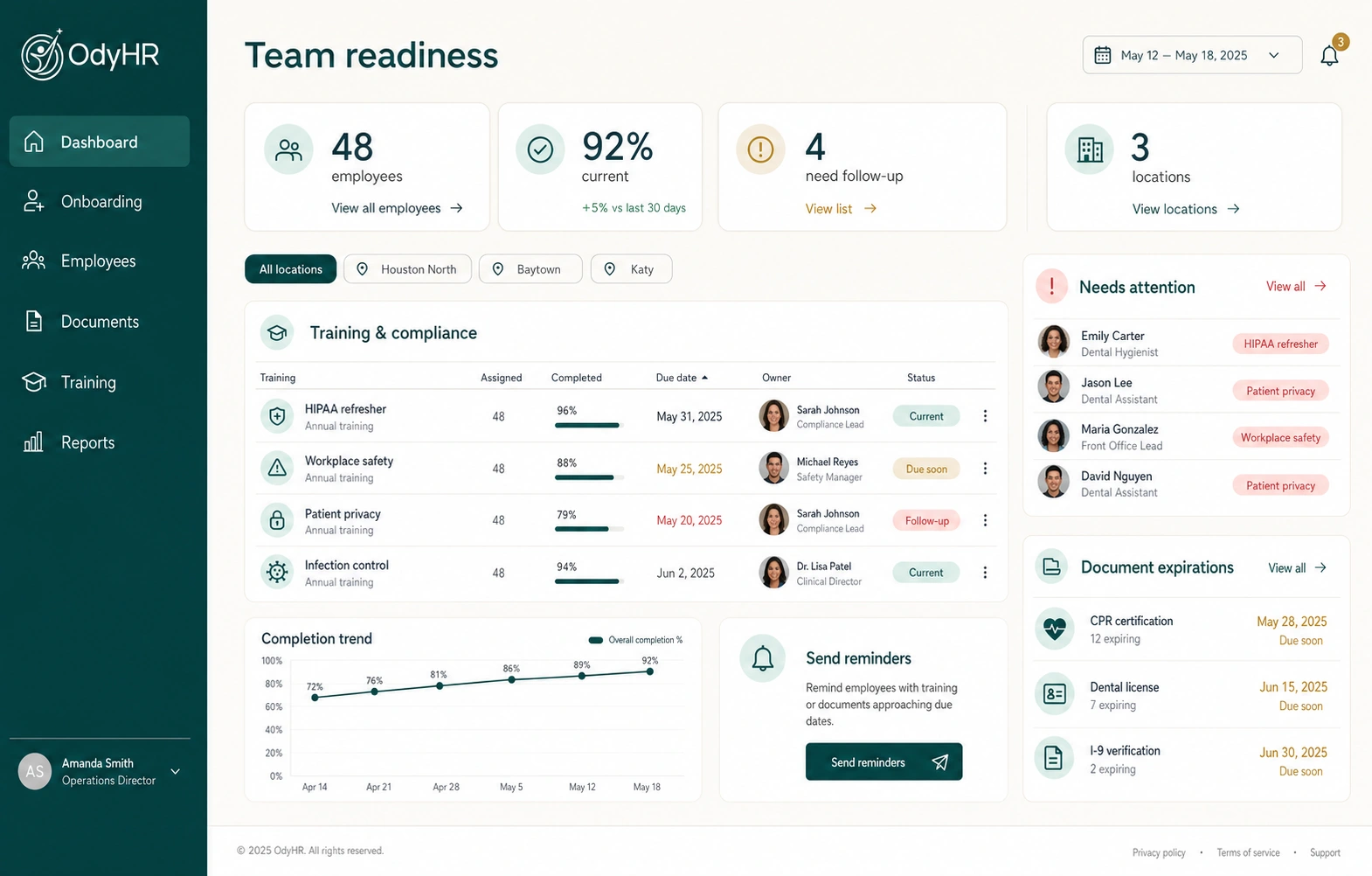
Use the existing onboarding checklist as a planning reference, then select the steps relevant to this move. Ask HR which existing records remain sufficient and which updates are actually needed.
Review learning against the new work. The training matrix can help identify relevant assignments, existing completion evidence and questions for the subject owner. Avoid assuming that a course completed for the previous role establishes readiness for every task in the new one.
5 Test the handoff with a concrete example
Consider a fictional coordinator moving from customer support to operations. Their manager agrees that two open support cases will transfer to another colleague. The colleague acknowledges the handover and receives the case references.
The operations manager requests access to a planning system. The authorized system owner checks the approved access, and the employee verifies that they can perform the intended task. Separately, the support manager decides when the old case-assignment responsibility should end.
At the first check-in, a new support case still reaches the employee through an old distribution list. The manager records the routing problem and assigns it to the list owner. The transfer stays open for that item until the agreed correction is verified.
This example illustrates a coordination problem. It is not a customer story or an OdyHR integration claim.
6 Close with the employee and both managers
Review whether responsibilities have moved, approved access changes are verified and the employee understands the new priorities. Give any remaining item an owner and a next check appropriate to the work.
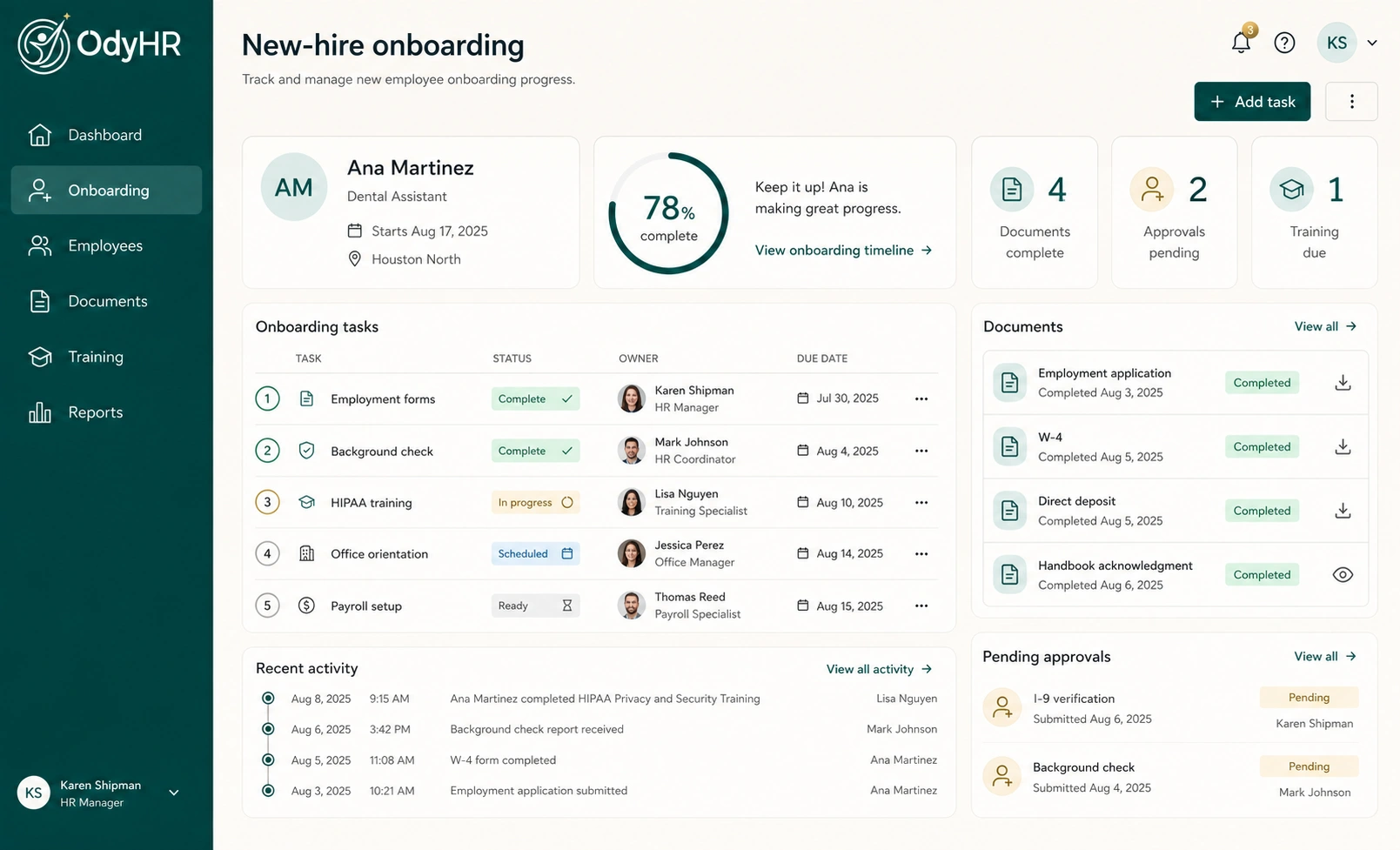
OdyHR's onboarding page describes tracking tasks, owners, due dates and readiness. If you want to use that approach for internal moves, talk through one planned transfer with the team and confirm the setup, record handling and responsibilities your process requires.
AUTHORITATIVE REFERENCES